Friday, June 17, 2016

Old-Fashioned Gramma’s Garden


Lots of us dream about accomplishing something that makes others shake their heads in wonder. My funky lifetime wish has been to grow an old-fashioned gramma’s flower garden full of purple, blue, and pink larkspur and bachelor buttons; orange, red, and yellow Indian blankets; lavender cosmos; yellow and white daisies; and multi-color hollyhocks. Despite lifetime efforts and lots of money spent on seeds, it’s taken me 40 years and aspringtime of gentle, well-timed, ample rains to make my dream come true.

The irony of this beautiful flowerbed makes me chuckle. I left town and abandoned it to Mother Nature’s care for weeks. During that time, it had no encouragement. No weeding, no fertilizing, no thinning out plants, no early morning sitting on the paving stones dreaming about the pretty bouquets I hoped to harvest and  display in my kitchen window. Apparently, dirt and seeds enjoy benign neglect because I drove up after that absence to spy thriving pinks, purples, blues, lavenders, whites, yellows, oranges, and reds spilling over garden borders and waving wildly  in evening breezes. They were everything I’d hoped for all the years I’d planted store-bought seed and carefully tended previous endeavors.

So, the next irony in this story is that girlfriends gave me hollyhock and larkspur seeds a few years ago. I then harvested bachelor button and Indian blanket seeds that I’d planted two summers ago and sprinkled those among my friends’ gifts. None of this year’s crop came from miserly garden shop packets. Nope, these were homegrown. Two fellow gardeners and I collected dried pods from previous years’ growth, separated the tiny seeds, and then saved them in paper bags to share.


The hollyhocks, bachelor buttons, Indian blanket, and larkspur took a year to gain a solid foothold in my yard. Last summer, I had scraggly, hesitant blooms--nothing like the towers of frothy color dancing boldly under this spring’s sun. In addition to the rain helping, I suspect good old Kansas breezes had something to do with the expansion of my plantings. A few seeds blew south and started new growth. Then stout southerly winds tumbled the majority of them north across our driveway until they landed in a bed of wood chips. Imagine my surprise to see them take root and grow.


By allowing nature to take its course, I ended up with stunning flowers in places I didn’t sow them. Initially, I thought I’d pull the unplanned starts, but I’m glad I didn’t. Not only do I have a new bed of larkspur and bachelor buttons outdoing itself on the other side of the drive, I have hollyhocks in places I never expected to find them. They proudly belong.


Perhaps letting Mother Nature do her thing in the sowing and watering is the secret to a successful old-fashioned, Gramma’s garden. That saucy anthropomorph has done a stellar job  taking seeds friends gave me, multiplying and then tossing them in the wind, and raining on them to show me how to get the job done. I’m going to help her out by harvesting, drying, and passing on these tiny power packs of beauty to my daughters and my friends.


Wednesday, June 8, 2016

A Window to the Past


Not long ago, I wrote an article about my interest in stained glass and shared photos of windows at Cottonwood Ranch in Studley. Several people said they wanted to know more about them. This topic is a mystery in progress, but I have more to share thanks to Don Rowlison, ranch curator.

The first Pratt settler, Abraham, an English entrepreneur first immigrated to Kansas in the late 1870s. He bought 160 acres along the South Solomon River, where he occupied a dugout. Despite the rustic conditions he faced in Kansas, he saw possibilities and returned to England where he convinced his oldest son John Fenton Pratt to return with him. Once here, John bought 160 acres of his own property from the Kansas Pacific Railroad on the north side of the river. Both men continued living in the underground home until the mid-80s when brother Tom helped them construct a single- roomed native stone structure on John’s property.

Along the way, the elder Pratt consolidated the towns of Skelton and Carl into Studley, named after a landmark in his native England. Then he established a lumberyard and ran it in addition to the agricultural endeavors he shared with his sons.

Due to the closing of the cattle trails and opportunity created by the 1883 depression, these men created a Yorkshire-style sheep operation. Through the mid-1880s, they replaced south-aligned sod buildings with native stone until they completed the traditional English structures and fencing visitors now observe at this historic site.


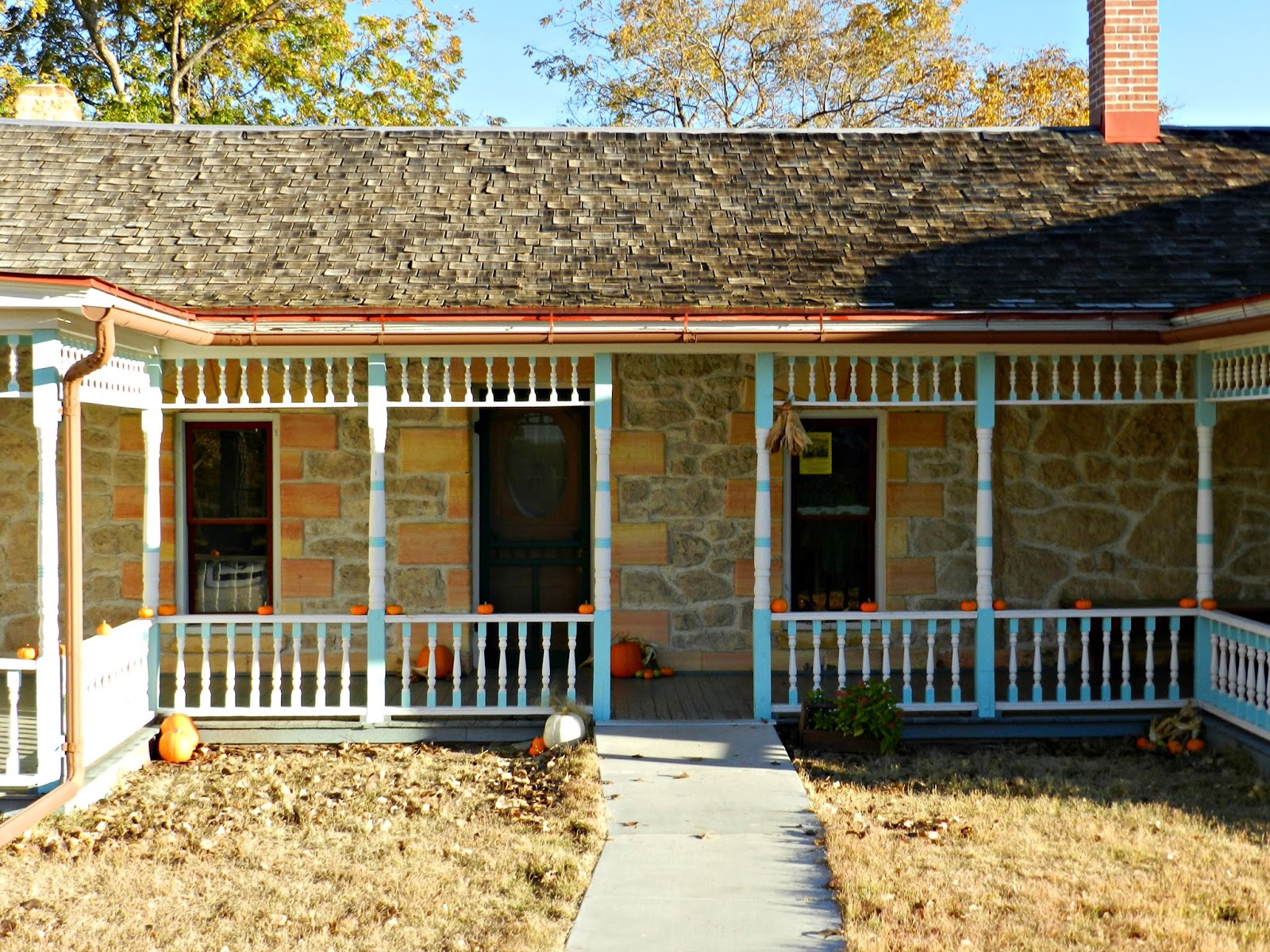
As the family became more successful, the ranch house developed from a single room stone structure to a lovely Victorian home with a parlor, dining room, kitchen, bath, and multiple bedrooms. To enhance its prairie presence, John or Jennie Pratt ordered four stained glass windows from the Studley lumberyard.

Those who have visited Cottonwood Ranch today know that they hung one window in the dining area, one called Lavender and Lace on the north side of the  kitchen, another larger design titled Buttons and Bows above their then-modern tin tub, and a still striking oval design  in the guest bedroom.


John was a meticulous record keeper and recorded when he ordered his windows from his father’s lumberyard. A researcher familiar with the records and era speculated these were shipped from Chicago, perhaps from the Sears or Montgomery Ward catalogues. That information is uncertain; however, John’s books indicate he frequently bought from these merchants.

We know the name of the designs in the bathroom and the kitchen.  Thanks to John’s records, we know the bathroom glass cost the handsome sum of $7.87. The delicate oval window visitors see from the front porch was more dear. According to his accounts, Pratt valued it at $16.83.

These prices seem cheap by today’s standards, but according to a site detailing 1896 wages, Kansas laborers averaged $2.50 per day. I’m guessing pay was lower in western Kansas where this ranch is located. Even at the stated daily wage, a person would have to work half a week to buy the less expensive product and six days to purchase the lovely oval design. Based on the windows installed in his house, raising sheep was profitable for John Fenton Pratt.


It’s worth a trip to Cottonwood Ranch to view these lovely art forms and to visit with Don Rowlison who has an encyclopedic understanding of this family and their role in Kansas history.

Thursday, June 2, 2016

Mosquitoes and the Food Chain

I spend considerable time in Northwest Wyoming where growing populations of grizzlies and black bears remind me humans are not the dominant species in the Greater Yellowstone Eco-system. Every year a hiker or hunter runs into a creature that thinks Homo sapiens are a food source. Prepared individuals have their bear spray or weapon close at hand to fend off such unwanted attention. Unfortunately, locals tell stories about those surprised by these beasts who don’t survive the encounter. Such tales set a nervous person on edge, but recent news reports about insect-borne damage and disease make me realize these mammals aren’t humans’ worst nightmare.

It’s bad enough to think about a colony of termites silently chomping their way through the wood supports in your home, wreaking havoc. I know an individual who bought an older residence and began remodeling only to discover millions of these tiny creatures digested his studs and supports into a holey mess. Even if homeowners find these insects in time to prevent massive structural damage, they’ll pay a pretty penny to destroy the colony and then fund maintenance treatments to keep future invaders away forever.

In another creepy-crawly story, a family we know recently discovered bed bugs hitchhiked home with them from their workplace. Fortunately, they caught the infestation early, but again it was a financial drain to wipe out these uninvited bloodsuckers. Just thinking about them makes me itch so I’m sure those fighting them directly suffered worse mental tortures.

While the mammals and bugs I’ve mentioned inflict horrific damage, newspaper stories from around the world inform us that nasty as they are these aren’t our worst fears. Aedes mosquitoes, known in the past because they transmit yellow fever, also carry the Zika virus and produce nearly as many headlines as current political candidates do. Scientists first identified this disease in the Zika Forest in Uganda in the 1940s. Since then, it has spread to multiple continents, most recently including South and Central America, Mexico, and the Caribbean. Southern America is on the radar.

In most cases, this disease related to dengue fever and West Nile virus causes unremarkable symptoms such as mild headaches, joint pains, and reddened eyes. In many cases, victims don’t even know they contracted it, or if they do, a Tylenol handles their complaints. In worst-case scenarios, the pathogen passes through a mother’s placenta to her fetus, causing microcephaly, a condition resulting in intellectual and motor disabilities. Concerns about this life-altering issue are affecting fertile women’s travel plans and attendance at the upcoming summer Olympics in Brazil.

When I read about young mothers delivering infants affected by this virus, I realize my fear of bears is over-rated. After all, in bear country, I have control. I carry pepper spray any time I’m in their territory and know if I use it correctly, the spritzed critter will race away. At this point, humans can also manage termite and bedbug infestations even if it puts a whammy on bank accounts and sets imaginations on overdrive.

Unfortunately, civilization hasn’t won the mosquito wars. We still battle malaria and yellow fever, and now we know these winged destroyers transfer a virus that humans can pass to their unborn with disastrous results. It’s beyond humbling to acknowledge something as small as a mosquito owns the top of the food chain.


Sunday, May 29, 2016

Custer, the Gilded Age, and Trains


I recently read Terry Mort’s Thieves Road: The Black Hills Betrayal and Custer’s Path to the Little Big Horn. This text investigated the effects of the American Gilded Age on Custer’s world, which made it different from many that explore this historical icon. The research focused heavily on post-Civil War American finance rather than on Custer’s personality or that of his fellow officers. Detailed information about the transcontinental railroad and resulting American progress brought to life how this era influenced the development of the West, including Kansas.

I told a friend I’d read this book and mentioned the term Gilded Age. She promptly asked what that term meant. It came to life via Mark Twain, the famed author who published a satire about the period following 1870 to the new century. His book The Gilded Age: A Tale of Today made fun of social issues of the time. Poking the bear as only he could, Twain prodded American sensibilities for sugarcoating serious concerns with a thin gold covering.

More than a century and a half has passed since those days so we must recollect that while America emerged reunited after the Civil War, it was a country with enormous debt. The nation’s finances were tied to the gold standard so a wobbly economy put a hold a most financial and business advancement. Shrewd businessmen with names such as Gould, Rockefeller, Carnegie, Mellon, Stanford, and Vanderbilt are still recognizable today. These enterprising fellows put the gilded in the term by investing heavily in railroads through selling stock to desperate job seekers whose lives depended on Western opportunities.

The impoverished government couldn’t aid the railroads financially, but it had an enormous amount of land to give companies selling bonds to fund track building across a vast continent. That incentive allowed entrepreneurs to either give or sell cheap town lots and farmland to those willing to migrate to the region. Early Kansas benefitted due to these booster promises. Many towns across our state began as barren railroad property, which soon filled with folks expecting to produce goods they could ship East on the same trains that delivered them to their new address.

Towns such as Dodge, Hays, Ellis, Wakeeney, Hill City, Logan, Phillipsburg, and Norton are direct results of Eastern robber barons’ dreams. One of those men left his mark in several places in Kansas. Jay Gould, a New York speculator tied to Boss Tweed of the famous Tammany Hall scandal, took control of the Union Pacific Railroad during the 1873 financial crisis. Making informed and competitive decisions, Gould revamped a failing system that then succeeded because of shipments to and from recently recruited farmers and ranchers.

Because of his impact on the region, Harlan, Kansas, in the North Central part of our state named a then prestigious university in that community Gould College. Today, you can find a plaque that marks this institution’s former locale. In Ellis, Kansas, several local property owners examined their real estate abstracts to find Gould’s signature as the first to transfer railroad property to private possession.


This book about how the railroad and the Gilded Age cost the Sioux the Black Hills and, subsequently, Custer his life aided my understanding of how my ancestors became part of the rush to develop communities across Kansas. Every time I cross metal rails now, I’ll thank those men who were looking out for their own bank accounts and not my relatives’. Their desire to create wealth offered my ancestors an incentive to leave Canada, England, and Russia for these Great Plains.

Masochistic Flowers


Take a close look at a rose bush, clematis vine, or slender columbine stalk. You’ll see perfectly formed leaves that bugs can chew to look like fishnet stockings in a feeding or two and fragile blooms that appear as if they’d unravel at the seams during high winds. Anything this delicate looking ought to frighten new gardeners. Not so. My mom has tested these three species and discovered they like abuse. In fact, they thrive on it.

For the last five decades, Mom has grown lovely roses in yards in two states. Her plants are always healthy and bloom profusely through the summer. Last year, her plants continued to produce huge, scented blossoms into mid-November when a visit from Jack Frost nipped them and ended the display. In this case, she feeds the plants regularly. Then in late February or early March, she grabs her clippers and takes out any stored up winter aggressions on those thorny stems. When she’s done, stubs of the former plant remain. By May, it’s clear the roots enjoyed this shearing as they produce hordes of new shoots that soon sport lovely red, white, and pink flowers she can enjoy on the plant or cut to put in a vase to perfume her house.


Mom’s green thumb includes more than roses. This last summer, Mom’s showy clematis overtook much of her front flowerbed draping itself over surrounding plants. Unsure of how to handle this issue, last fall she grabbed her shears again and took after those dry stems, cutting the vine back like a pedicurist trimming too-long toenails. All winter long, she worried that she might have gotten carried away and killed her favorite spring harbinger. Imagine her delight when she saw new growth earlier this year. Triple that emotion to describe how she reacted when she came home from a short trip to find over fifty saucer-sized blooms climbing her trellis.

Not surprisingly, cutting back that aggressive clematis also benefitted the yellow columbine growing in the area in front of Mom’s treasured vine. Last year her Colorado flowers were two feet tall. This year, they’re at least six inches to a foot higher. And she didn’t fertilize them. This growth is the result of receiving more sun along with abundant spring rains. You’d think towering, long stemmed blooms would succumb to some of the “breezes” we’ve enjoyed lately. Not these guys. We had a doozy of storm the other night and by sunrise, those yellow flower stood at attention to welcome those bright rays.


I tend to garden cautiously, but after seeing the results my mom gets by energetically trimming her plants and then not worrying about what the weather does to them, I’m going to change my ways. I’ve concluded that plants are like feet and hands. Anyone watching a pedicure or manicure for the first time would swear the technician was abusing the client during the process of softening and pushing back cuticles and dealing with calluses. In reality, anyone who’s enjoyed such services knows the treatment feels great, and like my mom’s treatment of her garden, produces lovely results.


Sunday, May 22, 2016

Orioles—Guest or Pest


For those who have computers and are on Facebook, join local photography sites to see what’s going on around our state. You won’t be sorry. Right now, a slew of oriole pictures--Baltimore, Bullock, and orchard-- fill scroll bars daily. Based on the shots I’m seeing, Kansas is currently inundated with these pretty birds. I love the digital captures of these saucy black and orange avians as well as stories about them that photographers post.

If you aren’t a birder or someone who loves one of these obsessed individuals, you may not have a clue about these colorful birds other than the fact you saw a streak of orange and black flit through nearby trees. In addition to their eye-catching plumage, they build quaint nests that look like small brown bags. While harder to see when trees leaf out, once foliage drops in the fall, you’ll see these burlap sack shapes dangling from bare branches. As a child, I love spotting an oriole nest and imagining what it would be like to begin life swaying in Kansas breezes.

These distinctly marked creatures migrate to Kansas each spring to feast on insect, nectar, and fruit as well as raise their young. One of the reasons photography and birding sites fill with these creatures’ likenesses is that May is their peak nest building time. They’ve completed long journeys from as far away as South America, and now they’re ready to weave those clever nurseries for their young.


The Baltimore sub-species is the most brightly colored with the male’s deep orange contrasting sharply against black feathers. The Bullock tends to a more yellow hue while the orchard is a russet tinge that camouflages more easily than its vivid kin. Based on the pictures posted online, these are the common Kansas visitors. Residents of Southern states claim a few more varieties for bird watchers to add to life lists.

In addition to being lovely to look at, orioles sing beautifully as well. Because they are so attractive and their songs brighten humans’ lives, many folks invite these birds to their yards. Nailing or propping half an orange in a nearby tree is a good way to lure one onto the premises. They are also fond of grape jelly served up in a fancy store-bought feeder or in less stylish jar lids nailed to a board. Based on cyberspace anecdotes, these feathered friends keep homeowners running to the grocery store to buy more of this sweet stuff. One birder in an oriole-dense community in Eastern Kansas reported that their local Aldi’s recently ran out of grape jelly. Once the store got a new shipment, the jars flew off the shelves into the hands of oriole buffs.

Buying scads of Welches is one thing, but sacrificing fresh fruit to this creature is another. A friend has a small orchard, and he’s not nearly as fond of orioles as these people putting pictures online. He’s battled aptly named orchard orioles for several years as they peck damaging holes in his ripening peaches. I have to confess that would frustrate me too. Their brilliant coloration and their lilting songs wouldn’t make up for the ruined hopes for luscious peach pies and cobblers I had as I watched blossoms open each spring.

Like all things on our blue planet, orioles are good and bad. Enjoy their coloring and their song, but protect your fruit trees from them. More than anything, sign up for some photo pages so you can enjoy their visits in other people’s yards.


Saturday, April 30, 2016

Bridges of Western Kansas


Combine past information with storytelling and you get history, which both entertains and provides examples of actions that improve lives. Kansas has had thousands of years of learning how to set up functional communities. At least 155 years of those include practice establishing permanent towns operated by local and state governments.

During post-settlement years, The Great Depression delivered hard lessons as well as some of the greatest infrastructure progress our citizens have experienced. As people directly involved during those years pass and families lose sight of their personal involvement, I worry about disappearing knowledge and landmarks that told us how the Works Progress Administration improved Kansans’ lives. For those interested in this subject, a drive down local roads uncovers cleverly engineered monuments to a program designed to stimulate the economy and create beautiful yet functional structures utilizing native resources. During that Sunday cruise, explore city parks, blue highways, and rural lanes to look for old WPA bridges.

In many regions, locally quarried limestone adds decorative elements that building crews don’t achieve using traditional concrete and rebar construction. For those who enjoy connecting the past to the present, it’s interesting to visit these sites and examine them closely. Those who investigate these historical constructions find imbedded markers establishing the year WPA funds and local labor produced them.

One of the greatest strengths of this federal program was that it depended on local resources, natural and human. Those who know their regional geology can identify the origin of stones used to build the bridges. Marci Penner’s The Guidebook for Kansas Explorers helps to identify the types of limestone construction travelers view as they explore different counties in our state.

Even sightseers without that resource or another like it will recognize that different quarries supplied material used during construction. Ellis County’s light colored Fort Hays limestone clearly differs from grayish toned material found Phillips County. A short trip to view Graham WPA sites frequently reveals the use of green rock.


In theory, history should make us wiser. If that’s true, why hasn’t our state taken advantage of lessons provided during one of the most difficult times Kansans faced? Those hard years proved we could build a skilled workforce that used native material to create functional and beautiful bridges across creeks, rivers, and draws that drain our watersheds. Such efforts stimulated local economies then. Why wouldn’t they do the same today?

When I hear people complaining about a lack of jobs, I wonder why elected officials don’t steal a page from history books. They could train and hire native-born engineers and construction crews to use resources at hand to build necessary infrastructure. To retain jobs, locals could maintain those structures.


Make a point of visiting these monuments to hard work and initiative before it’s too late to see them. Contact legislators to ask what it would take to reinstate such programs. With foresight, Kansans could better utilize resources and support local companies willing to specialize in building and preserving functional bridgework. We’d be taking care of our own in more ways than one, a trait our ancestors would recognize.

Sunday, April 24, 2016

Enjoying Somebody Else’s Garden


I know people who insist on creating original landscapes in their yards. They either begin with a clean palette and scrape their property down to bare earth or they buy homes in brand new subdivisions where all the dirt is recently backhoed and then leveled by earthmoving mega-machines. Once these individuals draw up their plans and plant accordingly, they have designer yards that draw the eye to appealing areas throughout their lot. This is one way to create beauty around a home. Another is to enjoy what previous occupants have planted and work around the property’s history.

Since I was a little girl, I’ve enjoyed investigating other people’s gardening talents. My great grandmother lived near Buckner Creek in Southwest Kansas where she cultivated irises, peonies, and black berry canes someone had tucked around her house before she moved in. As a toddler, I examined her bearded irises and thorny berry plants from a nose to petal point of view. Somehow, I understood these mature plants had lived in this place longer than Grandma had. I also got the idea that they connected her and me as well to whoever optimistically planted them in a land of little rain.

Because of those early experiences, I’ve always loved moving into homes with already established plantings. Lovely wild rose bushes with once a year yellow blooms, peonies, poppies, purple and bronze iris, naked ladies, and lilac borders graced our first bungalow built in the early 1900s. Their cycles of scented blossoms brightened that yard for decades and continue to do so two owners later.


We were only the second residents of our next home, but the couple who built that house transplanted iris tubers and lilac starts from their family’s original homestead into their new yard. In addition, they’d added rose bushes, purple phlox, and blue flax to enhance the native prairie flowers that surrounded them.

One of the attractions of our most recent real estate purchase was the pretty yard surrounding the house. That owner landscaped with new plantings to increase the curb of appeal of her property, but she also incorporated old-fashioned poppies, peonies, daisies, butter and eggs, day lilies, and violets that add a nostalgic touch to the yard. While I love the roses and shrubbery this gifted gardener chose to border the house, I most enjoy the plants she transferred from her farm and other people’s flowerbeds.


What I like best about plantings passed down from the generations who first turned these prairies into homes is that they connect us to real people who longed for reminders of where they came from. They were dead tired from just surviving, yet they made time to turn up flowerbeds around their homes. Even more telling, they shared precious water with rootstock or seeds they either ordered or carried from more settled regions of America and Europe.


Drive by any dying community or abandoned farmstead and you’ll see remnants of lilac borders, iris or peony beds, and poppies that now escape confinement. The humans who planted them are long gone. Equipment they left behind rusts in weedy yards that come to life each spring with improbable lavender, pink, and bright orange blooms that fleetingly tell stories of those who came before.


Sunday, April 17, 2016

People of the South Wind in the Land of Extremes


My brain collects trivia the way a magnet attracts iron filings, so just hearing the word Kansas means I immediately associate it with the tribe that gave the state its name. Anthropologists and historians would call them the Kansa, Quapaw, or Kaw people—otherwise known as the South Wind People. When this Siouan language-speaking group migrated from the Ohio Valley, they first settled in Arkansas and later crossed into what is now Kansas.

In 1724, a French explorer first documented a Kaw village near what is now the site of Doniphan in the eastern part of the state. In 1804, Lewis and Clark’s Corps of Discovery traveled up the Missouri and recorded the presence of this now abandoned village, whose occupants relocated on the Kansas River. While few citizens of the Kaw Nation remain in Kansas today, the state’s name serves to honor generations of native people whose families once farmed and hunted the place we call home. These People of the South Wind had to be a sturdy bunch to make their lives in this place.

You don’t have to be here long before you realize that the term South Wind People is apt. A single drive across a landscape punctuated by bent and twisted vegetation tells anyone paying attention that the prevailing wind and master sculptor of these cottonwood, elm, locust, and hackberry trees comes from the south. 


If you stay long enough to watch local news channels or read papers, you find headlines detailing massive fires roaring out of Oklahoma onto central Kansas prairies. Prevailing southerly gusts whip grass fires into monstrous tidal waves of flame devouring everything in their path. We know these infernos existed long before scholars documented these events. Such  blazes explain why this landscape was essentially treeless. Wind-driven conflagrations contained tree growth except along waterways until humans controlled most of these burns. The recent Medicine Lodge fire reminds us that south wind extremes aren’t always manageable.

Just a few weeks after reporting about out-of-region firefighters who loaded their gear and headed away from home to help control the fires in Southern Kansas, newsfeeds were busy again. This time, the Weather Channel lit up like a Christmas tree as analysts predicted massive rains driven by what else--gulf moisture pushed north by southerly winds. Forecasters stayed busy updating audiences with reports of up to 9 inches of rain in just over 24 hours. Overnight, dusty waterways turned to raging torrents while homeowners hurried to seal leaking roofs and basements.


Kansas demographics change over decades and centuries, but one truth remains. This is a land of extremes that often blow in on a south wind. That same breeze that twists and bends our trees shapes those of us who grow to love this place. It makes us tough souls who slap our hats on a bit more tightly and roll up our sleeves to clean up whatever messes those gales deliver. We too are people of the South Wind.


Sunday, April 10, 2016

A Sea of Purple

Spring is upon us in all her splendor, including this particular season’s signature sea of purple washing across people’s yards, over city park acres, through roadside ditches, and even spilling into farm fields and pastures. These tiny blooms set among frilly leaves welcome warming temperatures every year, but conditions this season seem especially suited to its growth. Commonly called henbit, this vegetation sporting tiny orchid-like flowers blends cheerfully with dandelions that brighten green lawns and irritate those who hate weeds. For some reason, this North African/Eurasian immigrant has outdone itself in the last few weeks.

As the days grow longer and more greenery unfurls in our area, a pinkish-purple carpet has overtaken what should be verdant lawns in every town I drive through. I know there are people like my mom who hate this invasion into their well-tended grass, but I’m inclined to forgive these tiny buds their trespasses and welcome them to town. Once I researched this relative newcomer to the plains, I found it had practical uses to match its eye-catching appearance.

Henbit or Lamium amplexicaule L. is member of the mint family. Although a member of Lamiaceae or mint clan, henbit doesn’t smell or taste like some of its more refreshing relatives. It comes by its common name because chickens love to eat it. Apparently, cranes and storks enjoy it as well because people in some regions of the country identify it as cranesbill, heronsbill, and storksbill. In addition to hens enjoying this gourmet treat, hummingbirds love to sip its nectar.

 For humans with exotic tastes, this plant is a perfect fit. Homo sapiens can dine on cleaned stems, flowers, and leaves harvested from unsprayed fields, raw in salads and smoothies, sautéed like kale or spinach, or brewed into teas. The plant said to taste either like kale or mushrooms is rich in iron, vitamins, and fiber, all positives for health enthusiasts. With such recommendations going for it, it’s surprising grocery stores don’t stock it every spring.

The explanation why these nutritious greens aren’t available right next to the kale at the local market might have something to do with the species ability to reproduce. A single plant can produce 2000 seeds a season, which makes me wish I had a savings account that offered such returns. Those who have planted one or two mint plants in the garden soon discover that these reproduce themselves much as cottontail bunnies do. Begin with two and after a couple of seasons, hundreds inhabit an area. This particular cousin to wintergreen, catnip, and spearmint apparently excels in this department. A drive through town confirms this.

The failure of this plant to thrive in the open market may have something to do with its negative qualities. I’ve already mentioned how easily it spreads. It has even more downsides. According to one source, field infestation results in diminished yields in small grain crops. In addition, authorities explain that it hosts disease-causing nematodes and fungi in soybeans and other cultivated plantings. Just reading this makes my skin crawl. Those aren’t advertisements to encourage this little plant to make itself at home on the prairie.

While henbit’s pretty flowers might capture a winter-dulled eye, and a gourmet diner may thrill at the idea of eating something picked from the wild, I’m thinking my mother may be right again. Perhaps this non-native species requires less tolerance. I’m sure chickens can find something to eat that doesn’t encourage nematodes and fungi.


In Like a Lion, Out Like a Lamb

Due to medical appointments and grandkid visits, I’ve spent several days driving across central and western Kansas over the last few weeks. During that travel time, gusting north winds have shaken and tossed my silver Toyota like a terrier shaking a rat, leaving me to hope that spring weather lore is more than a wishful thought. Now that the end of the month is in view and I have a few more journeys to make, that old saying about March, “In like a lion, out like a lamb,” appeals to me.

Unfortunately, after this persistent ditty popped into my brain, it stalked through grey matter like the king of the jungle mentioned in the verse. Since I couldn’t shut down the repeats ringing through my head, I decided to banish it by finding its adage’s origin. After cruising from one site to another to discover it source, I’m more confused than when I began.  

One author explained that the phrase’s birthplace might have begun with the Biblical reference to Jesus coming as a sacrificial lamb and returning as the Lion of Judah. To clarify himself, the writer shared that this comparison meant that March is a false spring. I’m still scratching my head at this metaphor. Hmmm. That one seems backward to me, so I might need instruction to see this relationship.

Another writer explored several 16th through 18th century references that revealed possible first uses of the adage. These include a line in little known playwright John Fletcher’s work A Wife for a month, early naturalist John Ray’s insertion of the phrase in his Catalogue of English Proverbs, and its appearance in the British American colonial text Ames Almanack in 1740. It’s clear this axiom’s been around a while.

Despite that researcher’s examples of when the term first came into use and another writer’s obscure metaphor to explain its meaning, I hoped to find a better answer for the origin of this saying about unpredictable March weather conditions. Since the references began centuries ago, it’s clear that I’m not the only person who finds this month filled with extreme weather noteworthy.

Eventually, I investigated long enough to find a couple of sites that explained the term has astronomical connections. From early times, stargazers observed that at the beginning of this particular calendar cycle, the lionly constellation Leo is rising. By April, Leo has descended and Aries the ram has taken over this heavenly role. While I don’t think of male sheep as gentle creatures, their lambs are certainly cuddly and sweet. This explanation satisfied the logical part of me until another old saying trips me up and sends me searching for more answers.

That said, I’m back to dealing with schizophrenic weather that is balmy and peaceful for a day or two. Then it roars enough to blow loose objects and tumbleweeds all the way to Oklahoma. Within a few days, it changes direction so that Kansans get to see the same items returning and heading for Nebraska.

I’m ready for that lion to exit and the lamb to rise.


Unexpected Mystery

Recently, our normally agreeable pooches squabbled loudly enough on the back porch that I hurried to see what triggered the ruckus. Before I opened the door, I could hear our little terrier giving his Shitzu/sheepdog companion a high-pitched lecture. Peeking out, I scoped the situation to find a snarling Jack Russell holding the high ground from his armchair vantage point. The larger white fur ball edged close to his cohort’s perch, taunting Buster with dancing feints toward his highness’s throne. Once I announced my presence and called them inside, they called a truce long enough to eat together.

Once the meal ended, Buster hurried to reclaim his perch. His hackles rose, and he growled any time fuzzy Dudley came close. Once my husband returned, I told him about their earlier brouhaha and the small dog’s continuing threats. To prevent a catastrophe, we stayed nearby to supervise our feuding four-leggeds and puzzled about how the younger dog had gotten on Grandpa Buster’s last nerve.

This low-grade rumble continued until bedtime, when the two yahoos managed bedded together in the house as usual. I figured our older dog’s arthritis was acting up and hoped changing weather would improve his mood.

Imagine my surprise when I awoke the morning and wandered into the kitchen to hear my husband say, “We have a mystery, and I think it’s why the dogs got into it yesterday.” I hadn’t had a drop of coffee so my brain wasn’t processing his words well.

“What are you talking about?” I mumbled and headed for my mug.

“I think I know why the dogs were fighting yesterday.”

“Okay, why?” I took the bait.

Holding out two hands containing a wadded towel, he signaled me to peek. Oh, man, that’s a scary invite at our house, which can mean anything from a snake to a giant spider. 

Steadying my yet-to-sip-a- drop-of-coffee nerves, I gingerly peeled back a terrycloth corner. Inside was a tiny bunny! Buster had found it in our yard and carried it to his overstuffed armchair where he nudged it under a blanket. This blew the theory that moving to town meant we’d never again deal with wild critters dogs brought home.


My next thought was that Buster was getting senile because at one time anything looking remotely like a packrat got the full-blown terrier treatment. For whatever reason, maybe because Dudley was trying to steal his treasure, this rabbit escaped that fate. Now, I understood the unexpected surliness I’d observed the previous day.

Once I saw this critter, my mind immediately recalled baby cottontails our young daughters bottle-fed. We quickly learned these little ones require bunny mommies. Despite our best efforts, we never kept one alive long enough to release it into the wild.

This recent discovery caused my husband to comb our yard, searching for this little guy’s fur-lined nursery all while hiding his activity from two vigilant dogs. Buster watched intently out the window, whining as if to say, “He’s mine. Finders keepers.”


To our surprise, mama had her babies directly under our noses in the flowerbed next to the house. She had four additional babes tucked into downy fur and grass. Here we thought we’d never have bunny troubles again when we moved to town, and now wascally wabbits live closer to us than they ever have.

Sunday, March 13, 2016

There’re Two Kinds of People: The Irish and Those Who Want to Be Irish


A childhood friend recently posted the title of this column on her Facebook page as a meme. It made me smile as I thought about the upcoming St. Patrick’s Day celebration. Even those who don’t have a drop of old  Ireland in them enjoy celebrating with corned beef and cabbage, soda bread, green beer, Irish parades, shamrocks, or leprechaun tales. This adoption of Irish customs, even temporarily, is a recent occurrence. In the mid to late 1800s, those of Irish heritage found more heartache than ready acceptance.

Many such immigrants came to this country under harsh conditions. They’d been starved out of Ireland during the potato famine or landowners had evicted croppers from tenant farms that couldn’t feed or clothe a family. According to emerging history, some arrived in the new world as slaves to work Caribbean sugar cane plantations. Examining old military rolls reveals that a number of those fresh-to-the- continent kept their bellies full by joining the U.S. Army, where they ended up as Indian fighters in the West.

For those who find little interest in history, it’s hard to understand that not so many generations ago, newcomers with strong brogues weren’t welcome. Those who wanted to work found it difficult to find employment, even if they had special skills. Walking up a street in developing communities that obviously needed hard workers, fresh arrivals would see signs in windows that said, “No Irish Need Apply.” Discrimination continued after death. Those who visit old cemeteries in mining communities will see graves segregated into sections for different ethnic groups.

Interestingly, a good number of Irish arrived in Kansas during this settlement period. Today, schoolchildren studying American history scan chapters filled with names such as Kennedy, Moynihan, and Keogh. According to one source, over 70 million people living outside Ireland, many of them in the United States, claim roots to that Emerald Isle. For those of Irish ancestry, it’s hard to imagine our forebears not only suffered hunger, poverty, and exploitation in the old country, but the struggle continued after they landed ashore in New York. Fortunately, for those who kept moving west and ended up in Kansas, life got easier.

We find towns like McCracken, named after a railroad employee. These hardy emigrants constructed a Catholic Church almost immediately. In Kansas Memory, we read Irish priest Thomas Butler’s report that Kansas churches of his denomination multiplied from three in 1854 to forty-five by 1871. He attributes this expansion to immigration. In Marshall County, visitors can explore the Irish community of St. Bridget established in 1862. Once there, they can tour a lovely chapel erected by settlers. Visit any old cemetery in the area, particularly a Catholic graveyard, to spot tombstones engraved Donnelly, Connelly, McKee, Keaghy, O’Brien, Sullivan, and so on. These aren’t foreign names here.

This state is a great example of what can happen when people work hard and adapt to a new culture. Most likely, you won’t hear locals speaking with an Irish brogue, but you might see several tipping back a Guinness to celebrate St. Paddy’s Day, even if they don’t have a drop of the blarney in them.


Friday, March 11, 2016

If Walls Could Talk


Some mornings I wake up to imagine I hear car and camera calling me to join them for another Kansas road trip. Coffee mug in its holder and hands at 10 and 2 on the wheel, I’m ready to explore dusty roads and fading communities along rural highways designed to knit together regions of our state. These journeys   help me appreciate hardy souls who built homes, businesses, churches, and schools with their hard-earned cash. Early pioneers had no access to federal or state-funding modern residents take for granted. As a retired teacher, I’m drawn to aged academic buildings like iron filings to a magnet.

Lately, I’ve visited a number of dilapidated towns to photograph deteriorating schools before they vanish from the landscape. Local historical societies have pictures of these brick wonders in their glory days, but I want to record the moments before they return to dust. Something about a once elegant structure in crumbling ruins captures my imagination more completely than reading old yearbook essays does.


Certainly, I feel nostalgic as I ramble around foundations to sense the layout of classrooms, auditoriums, and gymnasiums. Even more than a longing for a less complicated, slower-paced existence, I ache for that time when people incorporated handcrafted details to beautify a simple public building. Almost every one of these deteriorating edifices is exactly that—an edifice.  In a region distant from specialty guilds and artisans, who would complain about city leaders assembling unassuming structures with no embellishments? Visit these ruins, and it’s clear that is not what happened.

Many of the red brick establishments that remain were the community’s second or third school. Oftentimes, initial coursework took place in either a local home or dugout. As soon as a settlement developed sufficiently to afford new construction, workers erected out of wood or native stone two or three stories that each contained only one or two classrooms. Photos reveal modest playgrounds and necessary houses either to the side or behind these schools. What you see in these black and white photographs is pure function. Ornament is missing.

By the late teens through the thirties, communities along the Union Pacific and Missouri Pacific Railroads optimistic about continued growth and financial success raised new schools. Many featured then-popular Art Deco details. Those characteristics included angular brick walls with inlaid bands of vertical brick and a flat roof. They often display decorative geometric panels, vertical towers, stepped piers, and casement windows. A few regal antiques have beautiful arched, multi-paned windows above hand-carved entrance doors. One regional building still displays distinctive scroll-shaped lights on either side of its double doors. Just walking through such an entryway to reach class would add intent to a youngster’s studies.


Over decades, trucks and highways replaced railroads, resulting in a declining rural population. Decades later in the 60s, school consolidation forced closure of too many architectural masterpieces. In a few locations, individuals bought old buildings and turned them into homes or businesses. Unfortunately, too often, time and lack of maintenance resulted in unsalvageable eyesores. As bricks crumble , I hope families and museums publish their old school’s stories.


Sunday, February 21, 2016

Country Kid Fun


Unseasonably warm weather recently reminded me that country kids know how to have fun. I’d begun thinking about this topic after a visiting eight-year old from the Denver area entertained me with   adventures he enjoyed at a trampoline and arcade business near his home. After he detailed hours of good times performing tricks and challenging friends, I wondered what my grandkids would remember about their country childhoods. Thank goodness, I spied two teens playing a crazy game of either hide-n- seek or paint ball war in between long rows of snow-frosted hay bales along Highway 24. That nudge reminded me boredom wouldn’t affect anyone growing up in our family.

When those first seeds of concern sprouted, I should’ve thought about the farm kid essays I read during decades as a rural English teacher. On many occasions, I burst out laughing either in the middle of class while students read independently and I graded, or I interrupted quiet family evenings with guffaws that made my husband question my sanity. How could wielding a red pen be that much fun?

Nothing beats hay bales for fort building, assault advantages or hiding places in hedge apple wars, or simple jumping exercises. Who needs trampolines when you can leap from one round bale to the next to strengthen your legs and your balance? Add someone chasing you, and the thrill increases. For the less physically inclined youngsters, these objects offer quiet hiding places and comfy posts for cloud watching.

Not only do humans enjoy fragrant bundles of straw, hay, or alfalfa, critters like them too. Rural youngsters often spot red tails or northern harriers perched atop the straw while gnawing at a fresh meal. A favorite story detailed a kid plowing a field and seeing a bobcat snoozing lazily atop giant shredded wheat shapes bordering his work zone. Talk to most folks who grow up on farms or ranches, and even their eyes smile when they tell about about finding a farm cat with a litter of kitten tucked snugly into the hay.

Bales aren’t the only kind of fun country kids enjoy. Hot days lend themselves to unplanned dips in a farm pond or stock tank. Unlike the municipal pool, swimsuits aren’t required and kids can leap in fully clothed if they want. Swimmers might splash and giggle with the family dog or maybe feel stocked fish nibbling at their toes. Mossy bottoms make this a true adventure when soaked humans attempt to exit upright from the water.

Rural escapades don’t end when the sun goes down. Evenings offer opportunities to star gaze or count satellites arcing overhead in dark night skies unlittered by bright fluorescent and neon signs. On warm summer nights, entertainment includes counting and maybe catching flitting fireflies. Who doesn’t love watching a beetle with a blinking tail crawl up an arm or leg? That tickle added to the on/off glow is pure magic.

Hang around country kids for a while, and you realize a word is missing from their vocabulary. It’s the overused modern term—I’m bored. When you live in a landscape that constantly challenges you and allows your imagination to run wild, adventures await 24/7.


Saturday, February 13, 2016

Mud’s Blessings


Chinese philosophers are on to something with their Yin and Yang concepts. Light balances dark, silence/noise, joy/sorrow, and in our case, mud offsets dust.

Yes, mud. Icky, gooey, sticky mud. Like cat hair, it latches onto anything it touches, finding its way from roads, yards, and pastures onto shoes and pant legs and into homes. It finds its way into the oddest places—a speckle stuck to a grocery sack, a chunk dropped by the door, a smear on a purse.

Lately, there’s been such an abundance of it that most of us can hardly remember the true color of our vehicles. Next time you drive through a parking lot, look to see if you can identify in-town-only transportation. Country cars and trucks can’t hide. One sported such a coating that chunks finally started calving like ice floes off a glacier. The asphalt beneath that pickup had enough of someone’s former road or field topping it that a gardener could’ve stuck in a couple of potato eyes and carrots and started a nice veggie patch.

Mud doesn’t just coat a car or truck’s paint job. It adds new dimensions to the driving experience. Try being the second or third person to drive down a sloppy road and read the tracks of the vehicle ahead. It’s clear all will proceed smoothly when the tracks follow a straight path in the appropriate lane.

However, tire-wide trails that weave back and forth across the road forming sharp little wedges along the ditch are a heads-up alert. They reveal every minute wheel jerk where the previous driver hoped to level the journey. When you observe those, tighten your seat belt and check for loose items that can fly through the car. Deep ridges formed from ditch to ditch inspire gasps and devout prayers.

I wonder if this is how amusement parks with those tiny cars youngsters love to drive came to invent the track rail that keeps those vehicles on the road. As moisture-laden soils dry, unfortunate country drivers hit tire-grabbing gouges that derail pickups and sedans into the Grand Canyon of ruts.
 
Those trying to escape such bone-rattling caverns on an icy morning may find themselves fender to fence post up the nearest incline or launched into a patch of green wheat. It makes a person think similar conditions had much to do with the formation of the still-present tracks on the Santa Fe and Oregon Trails.

Fortunately, farmers and ranchers have a handle on this situation. Not only do they own tractors to pull stuck vehicles out of morasses of waterlogged soil, most have multiple pairs of dandy boots—knee-high, rubberized footwear they can hose down after tromping through deep slime to feed and water livestock.

Mud isn’t only miserable; it multiplies work. Cattle, pig, and horse owners schedule extra time to feed and care for animals. This mire also increases drive time to town. Road crews know their real work begins when it dries. Housekeepers and janitors cringe, thinking about the extra vacuuming and scrubbing. One day of sludge makes it obvious why farmhouses have a mudroom.

But! Yes. But. Lack of mud means lack of moisture. It means blowing dirt. It means watching rooster tails of dust hang forever airborne when someone drives down a country road. It means no green wheat peeking from furrows, no milo, no sorghum, no soybeans, no corn, no rippling creeks, no fish to catch, no wild flowers.
 
Lack of mud suggests no life for many of us who love the prairie. I best buy some muck boots, extra vacuum bags, and start counting my dirty blessings. 


Sunday, February 7, 2016

Weather Forecasting: A Miserable Job


Weather forecasters have a miserable job. On one hand, they predict impending catastrophic weather and save lives. Think of residents if Oklahoma who made it to shelter before devastating F5 tornadoes bore down on their neighborhoods and businesses. On the other, these same experts frequently predict impending catastrophic storms and the cell fritzes out, leaving the audience to compare yesterday’s hero to the boy who cried wolf. It’s a dilemma.

Not surprisingly, erratic weather has made Kansas weather announcers gun shy about making firm forecasts. One of my favorites grinned as he explained he was in the business of stating what might happen, not necessarily what would. Recent blizzard reports certainly had viewers wondering whether our favorite storm team was on target or if we had cleared milk, bread, and toilet paper shelves at local markets for no reason. I heard more than one person questioning the forecast when it didn’t arrive as soon as announcers said it might.

When this storm actually hit and blowing snow coated to our windows and doors, I recollected blizzards I’d either read about or lived through myself. As recently as a couple of decades ago, I don’t recall getting much warning about whiteouts that slowed travel to a crawl or shut it down entirely. I remember times I drove twenty miles  to work on clear roads in the morning and found myself unable to tell if I was actually driving on asphalt and not in the ditch during an unannounced, sideways-blowing-snow,  two hour marathon home.


This brought to mind a favorite Mari Sandoz novel 80s and 90s era students read. Each year, I assigned Winter Thunder in January or February so readers could relate to High Plains weather’s ability to change quickly. Every one of my kids paid close attention to this tale of Nebraska Sandhill schoolchildren who got on a bus to leave their one room schoolhouse at beginning of a snowstorm.

During the course of the story, class released early, in hopes kids would beat the storm home. Unfortunately, their bus overturned and caught fire as the whiteout roared to life. The young teacher, a 16-year-old student bus driver, and the rest of the children faced freezing to death as they escaped wearing only standard winter clothing and carrying that day’s lunches.

Sandoz based this weeklong survival tale on her schoolteacher niece’s experience in 1949. The gripping narrative detailed kids and teacher blindly clasping the person in front of them as they followed a fence line into willows where they sheltered until rescuers found them days later. Imagine every edgy child’s survival story you’ve read or watched involving frozen limbs and starvation to consider how frightening this was.


Thinking about this turned my mind down another bunny trail as I recalled a carload of Ellis teens lost in a blizzard in the late 80s. If you weren’t on a search team defying Mother Nature’s nastiest as you tried to find these youngsters, you were praying for children, families, and rescuers. The element this event shared with Mari Sandoz’s Winter Thunder was that before events turned into a life or death matter, no one had an inkling such a powerful storm was moving in.


Now, when my favorite weather team tells me to prepare for the worst, I do, knowing very well that their forecast will probably be wrong. I’d rather re-plan something than begin a trip thinking I had nothing to worry about.


Saturday, January 30, 2016

Colorful Mystery


Memory works in funny ways. With passing time, one event blends with another until, eventually, recollections stitch themselves together like an old patchwork quilt assembled from every leftover scrap lying about the house. Snippets of bright color or interesting texture catch the eye and off a mind goes following a bunny trail that may not go anywhere. I started following one of those winding, backtracking thoughts recently and found myself lost in a mystery. I hope someone can help me find answers.

Since I was tiny, I’ve loved stained glass windows. I enjoy the varying hues, the stories each scene tells, and the way sunlight glows through, tinting everything in its path. Magically, words of hymns and sermons seem to float in that radiant light like waltzing dust motes during Sunday services. My first memories link to the sanctuary windows in the Methodist Church in Meade, Kansas. I loved how distant artists depicted Bible stories and characters in vibrant colors that seemed richer than any shade I could create with my crayons and paints.

Not long after these religious panels engaged my toddler attention, a relative moved into an Victorian two story with a gorgeous stained glass window at the stairway landing between the first and second floors. My cousins and I loved sliding down those stairs, which means we had to climb to that midway point to launch our speedy descents. I don’t know that anyone else dawdled on the way up, but I did. Sunlight radiating through that jewel-toned melted silica joined by lead strips dazed my senses enough that I didn’t feel a single bump on the way down.


Even now, my heart starts beating faster when I discover century-old buildings that contain their original stained glass. Apparently, a goodly number of early settlers found a way to put at least one decorative window in their home or business. For those on a strict budget, that might mean four tiny squares of color soldered in each corner of a rectangle or square. Well-to-do families had more options.

Those with fatter wallets might incorporate several ornamental windows throughout their home. Almost every long-established community has several of these two or three storied houses replete with decorative gingerbread, wrought iron fence work, and stunning glass throughout the property. These make me recollect a world with fewer distractions than ours has. What a joy it would be to look up to see sunlight streaming through amber, lavender, cobalt, ruby, and emerald tones while you were dusting, scrubbing, or cooking.

A trip to Cottonwood Ranch in Studley reveals excellent examples of such a home. The Pratt family members were among the first permanent settlers in that region. Mrs. Pratt immigrated from greener landscapes and struggled with the monotony of her new homeland. To help, her husband built a lovely ranch. Modern visitors see the evidence as they travel from room to room, admiring colorful glasswork in nearly every window.


Here’s the mystery. I want to know where early Kansans bought these windows. I did learn factories that produced these arts works weren’t local. So far, I’ve discovered that some of the big Catholic churches ordered their panels from either the East Coast or Europe. I can’t imagine the shipping costs on these breakables. What intrigues me even more is knowing every little town in this area had homes and churches decorated with these lovely works of art. Where did they come from and at what cost?


Saturday, January 23, 2016

Kansas Day Dreaming


Windmills pull not only water up from below the earth but they also break a seemingly endless horizon to pull the eye toward heaven and optimism. In a stark, dry landscape, such attractions nurture not only bodies but also spirits. Just the memory of spinning blades drawing thin streams of cool water to spill into a tank is enough to send the mind back in time to recover damp earth scents and the sensation of green buffalo grass curling under bare feet. This ability to reclaim the past explains why so many paintings and photos of isolated windmills hang in Great Plains homes and galleries. This prairie icon means survival to anyone connected to this place for generations.

Wind has powered human life since early civilization. Confining it and making it work isn’t unique to Americans, but it has made homesteading and agriculture in Flyover country possible. Before these skinny towers lured  the eye upward from rolling waves of blue stem, Indian, and grama grasses, the arid nature of the place meant only nomadic people could survive here. Once Nathaniel Halladay invented the self-governing windmill, stickers—people who put down roots to stay through the good times and the bad—could claim homesteads and make dreams come true.

Once hopeful settlers declared the boundaries of their land, they drilled into the ancient underground lake beneath their feet to find water for themselves and their livestock. Those fortunate enough to tap into the aquifer no longer had to depend on live springs or the capture of unpredictable rains in a cistern. Where native occupants packed and moved when a water source vanished, this new technology permitted incoming settlers to create their own oases in what people east of the Mississippi called the Great American Desert.


This newly patented device promised more than it could deliver to many would-be ranchers and farmers who headed west to claim free land. Now days, poets, artists, historians, and the curious cruise dusty country roads to look for crumbling telltale towers silhouetted by collapsed ruins in the distance. Sometimes bullet-riddled vanes still spin in the wind, emitting a haunting banshee cry. Ironically, greenery growing at the base of these relics hints at still present underground treasure.

What these backroad wanderers find are stories written in dreams, sweat, and imported resources. Anyone who stops long enough to let their eyes wander over a former homestead in the middle of a current farmer’s wheat field or pasture has a decision to make. Do these ruins reveal the prelude to the lovely brick home and giant metal sheds up the road a few miles, or do they tell instead the sad tale of a forgotten family who left during hard times? Too often, the second version is the truth, but few of us find that romantic or memorable. We prefer the first, a tale of expectation and success.


Hope is what Halladay and his competitors’ windmills delivered and what makes them iconic prairie images even now. As long as some of us call these isolated plains home and long to remain here, someone will keep photographing or painting bent and tumbling towers that pierce the horizon and tell us dreams can come true.