Showing posts with label stained glass. Show all posts

Wednesday, June 8, 2016

A Window to the Past


Not long ago, I wrote an article about my interest in stained glass and shared photos of windows at Cottonwood Ranch in Studley. Several people said they wanted to know more about them. This topic is a mystery in progress, but I have more to share thanks to Don Rowlison, ranch curator.

The first Pratt settler, Abraham, an English entrepreneur first immigrated to Kansas in the late 1870s. He bought 160 acres along the South Solomon River, where he occupied a dugout. Despite the rustic conditions he faced in Kansas, he saw possibilities and returned to England where he convinced his oldest son John Fenton Pratt to return with him. Once here, John bought 160 acres of his own property from the Kansas Pacific Railroad on the north side of the river. Both men continued living in the underground home until the mid-80s when brother Tom helped them construct a single- roomed native stone structure on John’s property.

Along the way, the elder Pratt consolidated the towns of Skelton and Carl into Studley, named after a landmark in his native England. Then he established a lumberyard and ran it in addition to the agricultural endeavors he shared with his sons.

Due to the closing of the cattle trails and opportunity created by the 1883 depression, these men created a Yorkshire-style sheep operation. Through the mid-1880s, they replaced south-aligned sod buildings with native stone until they completed the traditional English structures and fencing visitors now observe at this historic site.


As the family became more successful, the ranch house developed from a single room stone structure to a lovely Victorian home with a parlor, dining room, kitchen, bath, and multiple bedrooms. To enhance its prairie presence, John or Jennie Pratt ordered four stained glass windows from the Studley lumberyard.

Those who have visited Cottonwood Ranch today know that they hung one window in the dining area, one called Lavender and Lace on the north side of the  kitchen, another larger design titled Buttons and Bows above their then-modern tin tub, and a still striking oval design  in the guest bedroom.


John was a meticulous record keeper and recorded when he ordered his windows from his father’s lumberyard. A researcher familiar with the records and era speculated these were shipped from Chicago, perhaps from the Sears or Montgomery Ward catalogues. That information is uncertain; however, John’s books indicate he frequently bought from these merchants.

We know the name of the designs in the bathroom and the kitchen.  Thanks to John’s records, we know the bathroom glass cost the handsome sum of $7.87. The delicate oval window visitors see from the front porch was more dear. According to his accounts, Pratt valued it at $16.83.

These prices seem cheap by today’s standards, but according to a site detailing 1896 wages, Kansas laborers averaged $2.50 per day. I’m guessing pay was lower in western Kansas where this ranch is located. Even at the stated daily wage, a person would have to work half a week to buy the less expensive product and six days to purchase the lovely oval design. Based on the windows installed in his house, raising sheep was profitable for John Fenton Pratt.
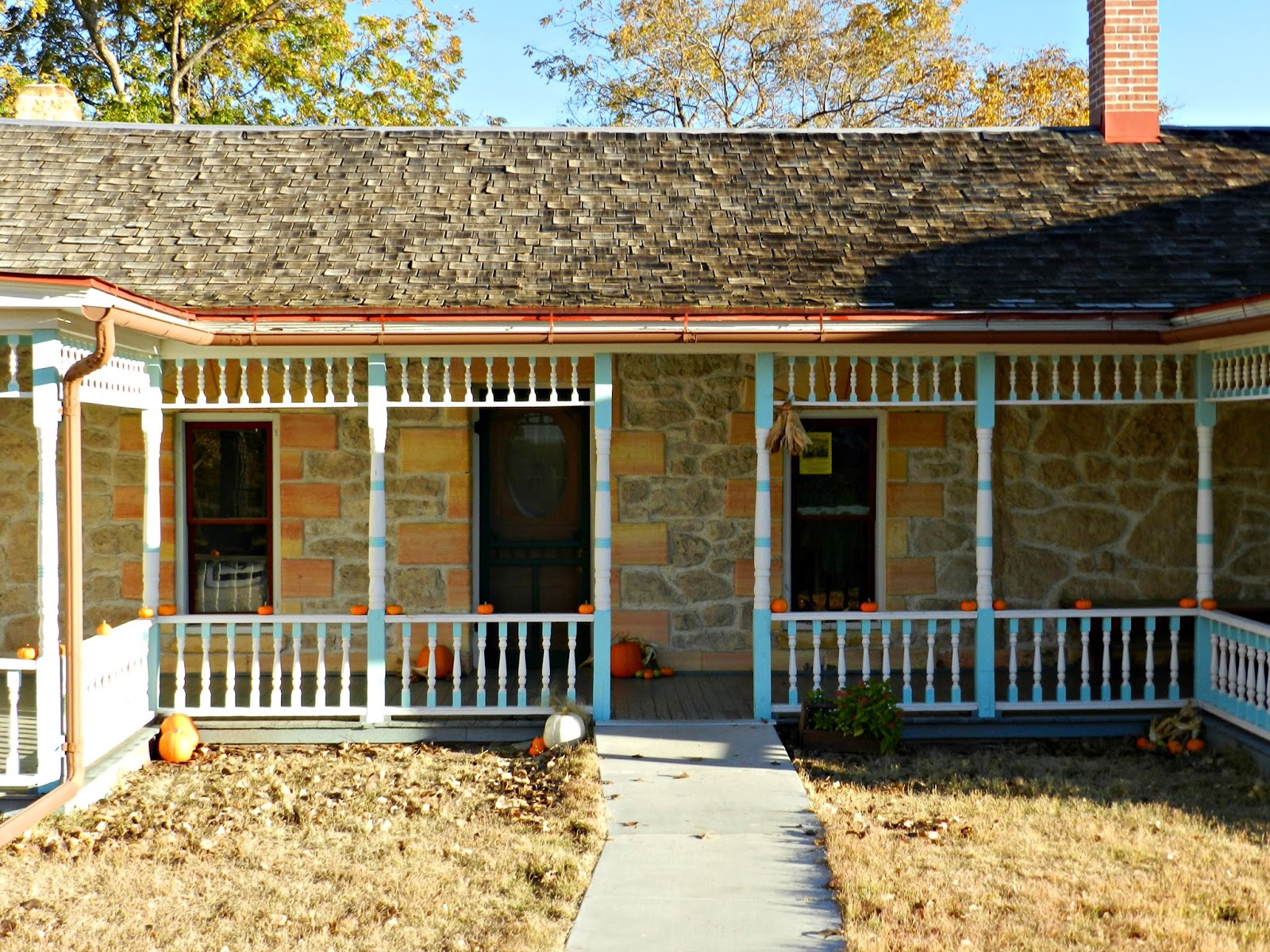


It’s worth a trip to Cottonwood Ranch to view these lovely art forms and to visit with Don Rowlison who has an encyclopedic understanding of this family and their role in Kansas history.

Saturday, January 30, 2016

Colorful Mystery


Memory works in funny ways. With passing time, one event blends with another until, eventually, recollections stitch themselves together like an old patchwork quilt assembled from every leftover scrap lying about the house. Snippets of bright color or interesting texture catch the eye and off a mind goes following a bunny trail that may not go anywhere. I started following one of those winding, backtracking thoughts recently and found myself lost in a mystery. I hope someone can help me find answers.

Since I was tiny, I’ve loved stained glass windows. I enjoy the varying hues, the stories each scene tells, and the way sunlight glows through, tinting everything in its path. Magically, words of hymns and sermons seem to float in that radiant light like waltzing dust motes during Sunday services. My first memories link to the sanctuary windows in the Methodist Church in Meade, Kansas. I loved how distant artists depicted Bible stories and characters in vibrant colors that seemed richer than any shade I could create with my crayons and paints.

Not long after these religious panels engaged my toddler attention, a relative moved into an Victorian two story with a gorgeous stained glass window at the stairway landing between the first and second floors. My cousins and I loved sliding down those stairs, which means we had to climb to that midway point to launch our speedy descents. I don’t know that anyone else dawdled on the way up, but I did. Sunlight radiating through that jewel-toned melted silica joined by lead strips dazed my senses enough that I didn’t feel a single bump on the way down.


Even now, my heart starts beating faster when I discover century-old buildings that contain their original stained glass. Apparently, a goodly number of early settlers found a way to put at least one decorative window in their home or business. For those on a strict budget, that might mean four tiny squares of color soldered in each corner of a rectangle or square. Well-to-do families had more options.

Those with fatter wallets might incorporate several ornamental windows throughout their home. Almost every long-established community has several of these two or three storied houses replete with decorative gingerbread, wrought iron fence work, and stunning glass throughout the property. These make me recollect a world with fewer distractions than ours has. What a joy it would be to look up to see sunlight streaming through amber, lavender, cobalt, ruby, and emerald tones while you were dusting, scrubbing, or cooking.

A trip to Cottonwood Ranch in Studley reveals excellent examples of such a home. The Pratt family members were among the first permanent settlers in that region. Mrs. Pratt immigrated from greener landscapes and struggled with the monotony of her new homeland. To help, her husband built a lovely ranch. Modern visitors see the evidence as they travel from room to room, admiring colorful glasswork in nearly every window.


Here’s the mystery. I want to know where early Kansans bought these windows. I did learn factories that produced these arts works weren’t local. So far, I’ve discovered that some of the big Catholic churches ordered their panels from either the East Coast or Europe. I can’t imagine the shipping costs on these breakables. What intrigues me even more is knowing every little town in this area had homes and churches decorated with these lovely works of art. Where did they come from and at what cost?